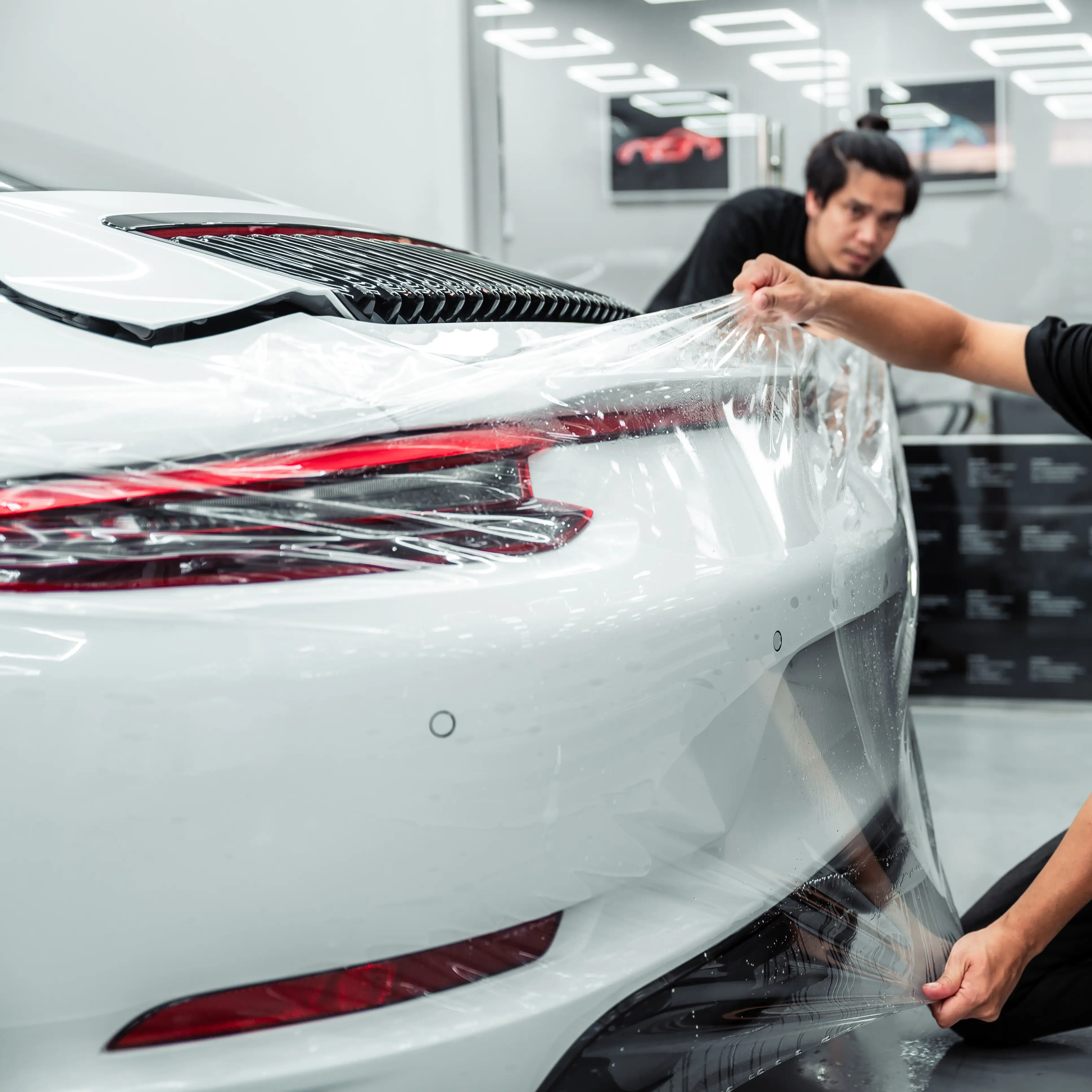
What is paint protection film, and why do new cars need it? Paint Protection Film (PPF) is a clear, durable layer applied to a car’s surface. It protects the paint from minor scratches, chips, stains, and damage from the sun.
The popularity comes from its ability to extend paint life while keeping cars looking new. The trend is much stronger in Dubai because of the hot weather and dusty roads. The film applied to your vehicle by experts becomes a shield for your car. This article covers PPF pros and cons, pricing, and the available types.
What is Paint Protection Film (PPF)?
Paint protection film PPF is a clear urethane film applied to cars. This film protects your car's paint by establishing an invisible barrier over it. The film prevents chips scratches and other dents. It can protect automotive paint from contaminants like bird droppings tree sap. Harmful UV rays can quickly fade and harm car paint.
There are various types and finishes of paint protection films. The options include clear, matte, or colored. For quality installation, there's a need for the right tools and skills. Many drivers use certified car PPF in Dubai experts for reliable application and durability. Certified installers ensure that the application is flawless and without air bubbles. Areas like the front bumper, hood, and side mirrors need careful attention.
Advantages of PPF for Cars
Paint protection film PPF offers multiple benefits for cars, including:
Protection Against Scratches and Chips
Paint protection films shield painted surfaces from everyday wear and damage. On regular drives, road debris and stone chips may always hit your car. The protective film absorbs impact from gravel and rock chips. Your car's surface stays smooth and undamaged underneath with PPF. Door edges and areas like bumpers get extra protection.
Preserves Gloss and Resale Value
The protection film keeps the paint on your car looking like new. The clear paint film keeps the original paint safe, slowing car's aging process. Your car's resale value increases when it looks new. The film also keeps washing from leaving swirl marks on the surface. When PPF preserves the surface, there is no need for paint correction.
UV and Weather Resistance
Paint fades and breaks down quickly when exposed to harmful UV radiation. While staying clear, protection films stop harmful rays. Unprotected surfaces can be damaged by things like tree sap and bird droppings. These environmental pollutants don't taint the film. Chemical resistance and stain resistance help keep things safe from road salt and harsh cleaning products.
Self-Healing Properties
With modern healing technology, films may fix themselves. Light scratches vanish when exposed to warm temperatures or sunlight. Using a heat gun can help the surface heal faster. The healing paint protection film goes back to being smooth. This self-repair technology significantly cuts down on the requirement for maintenance.
Disadvantages of Paint Protection Film
Although applying PPF has its benefits, car owners should know some risks covered below:
Higher Upfront Cost
Paint protection film is more expensive than ceramic coating or regular wax. Most vehicle owners already spend a lot of money on new vehicle. Adding PPF installation makes the overall cost of ownership higher. Ceramic coatings offer some protection at lower prices initially. Paint protection also provides superior impact and scratch protection.
Professional Installation Required
To get the best results from PPF installation, you need skilled, certified installers. When you do it yourself, you can get air bubbles and raised edges. Wrong installation could permanently affect its appearance. So, using professional methods ensures that the application looks smooth and invisible.
Possible Yellowing or Edge Peeling
UV rays can make low-quality protective films yellow over time. When you take off cheap films, they can leave behind sticky residue. When installers cut film incorrectly, the edges rip. Low-quality urethane film quickly loses its ability to repair. When yellowed film covers the surface, the factory finish looks worse. After much use, some cheap film obtains a texture like orange peel.
Types of Paint Protection Film Available
Paint protection film comes in multiple finishes and custom options. Below are the options for different preferences:
Glossy Transparent PPF
Clear protection film keeps the finish on your car just like it was when it left the factory. This film invisibly preserves the painted surface underneath completely. Glossy films make the natural shine and depth of your car's paint look better. The clear choice goes with all automobile paint without any problems.
Matte Finish PPF
Matte finish films offer surface protection while giving cars a unique stealth look. This option transforms glossy paint into sophisticated flat finishes temporarily. The matte finish also helps to hide little flaws in the car paint. This protective film works best on high-end and sports cars. Matte films offer scratch protection just as well as transparent films do.
Colored and Custom Films
Custom protection films are a stylish way to protect car surfaces. Black films work well to make light-colored painted surfaces look very different. Tinted options protect the paint on the car while adding small color alterations. You may show off your personality by choosing custom PPF colors. Colored films also offer all the same protection as transparent films. Owners can find films that match their trim or accent items.
PPF Installation Options
Car owners can choose from a variety of coverage packages that fit their protection needs. Some of the options are:
Partial vs Full Coverage
Partial coverage focuses on high-impact areas like the front bumper and hood. This affordable option protects common areas like hood, fenders, and rear wheel arches. Full vehicle coverage is a premium option offering complete protection, but it costs more up front. Complete covering keeps all painted surfaces safe from damage and wear caused by the weather.
Key Areas Commonly Protected
Hood protection keeps the biggest flat area safe from damage caused by road debris. Front bumper coverage protects cars from rock chips and other impacts. Parking lot scratches and door edges can damage side mirrors, so they need protection. Film coating keeps headlights safe from stone chipping and UV damage.
Paint Protection Film vs Vinyl Wrap
Paint protection film and vinyl wraps have diverse uses. The main goal of PPF is to keep your car's original paint safe from damage. The protective film keeps your car's paint safe while adding layers of protection that you can't see.
Vinyl wraps let you customize your look with an endless number of colors and designs. These wraps affect how your car looks, but they don't really protect the paint. Some car owners use both to protect their cars. First, they put PPF on places that get hit a lot, like the front bumper. Then, use vinyl wraps to cover other sections and give them a unique look.
Is PPF Worth It for Your Car?
Although costly, paint protection film delivers several benefits to cars. New cars benefit most from immediate installation after purchase. Luxury cars justify the investment through enhanced resale value protection. Highway drivers have to deal with road debris and dangerous UV radiation. So, PPF protects and saves correction costs over time.
Protection films don't help as much on older cars that already have paint damage. The greater upfront expenditures of PPF are rarely worth it for short-term ownership. Consider your driving habits and your car's worth before you choose paint protection.
Frequently Asked Questions About PPF
How long does PPF last?
With the right care, a good paint protection film can last 5 to 10 years. The film's longevity is greatly affected by the weather and UV rays.
Does PPF damage car paint?
No, paint protection absolutely protects the paint on your car. It can be safely removed from cars.
Can PPF be applied on headlights?
Yes, headlight protection prevents stone chips and harmful UV damage effectively. You can also apply PPF for excellent clarity protection for lighting.
Is PPF easy to remove?
Yes. Professional removal ensures that no residue stays on painted surfaces. Certified installers can safely remove film using a heat gun.
Which type of PPF is best?
It all comes down to what you like. Glossy maintains factory shine, matte creates a stealth appearance, and color adds personal style.


 22/09/2025
 Evolve